It happens fast. A contractor leaves an equipment trailer at a job site overnight. By morning, it’s gone. Inside were tools and machines worth more than $15,000. This kind of loss is common, and it’s growing. Police reports show that trailer theft is rising across the U.S., especially in construction and landscaping yards, storage facilities, and open job sites. Thieves target trailers because they’re easy to tow away and often left unprotected.
If you use a trailer for work or hauling, you face the same risk. Trailers spend long hours parked in places where no one is watching. Locks help, but they can be cut. Cameras help, but only after the fact. You need a way to know where your trailer is at all times. That’s where a trailer GPS tracker comes in.
A GPS tracker for trailer security uses satellite signals and cellular data to show you the real-time location of your trailer. You can see movement on your phone, get alerts if it leaves a safe area, and share location details with law enforcement if it’s stolen. Many trackers are small enough to hide, and some run for weeks or months on a single charge.
In this guide, you’ll learn how these trackers work, what features matter most, and how to install one with confidence. You’ll also see how the right device can protect your trailer, your tools, and your peace of mind.
What type of trailer are you trying to protect?
The Real Cost of a Stolen Trailer
Every year, thousands of trailers end up missing, often quietly, without much fanfare. Some estimates suggest that utility and equipment trailers alone number into the hundreds of thousands stolen annually in the U.S., with recovery rates often below 30%. The loss isn’t just financial. For a contractor, hauling trailer after trailer to replace gear means wasted time, delayed work, and lost revenue.
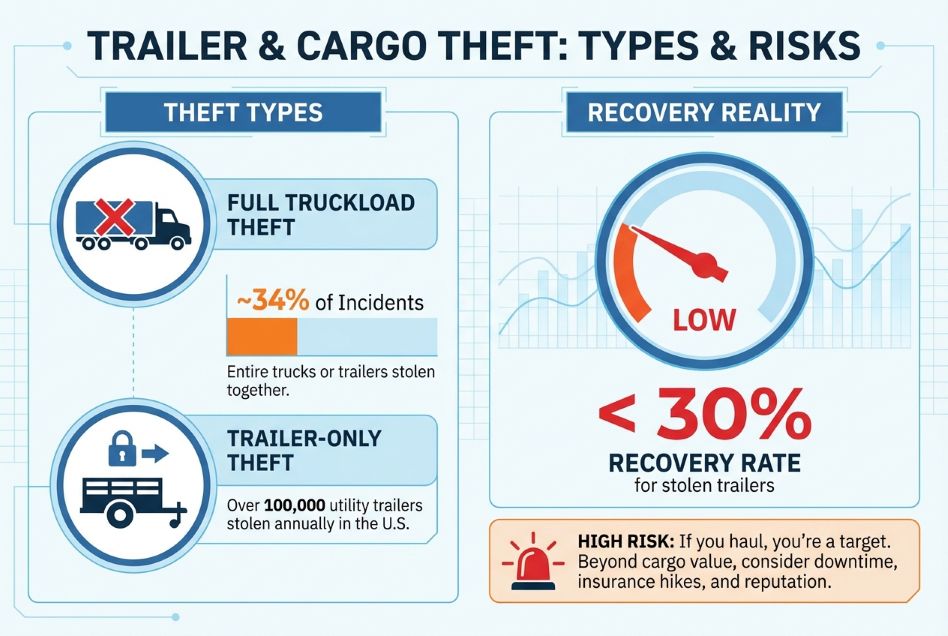
Why are trailers such an easy target? First, many are parked for long periods in yards, job sites, storage lots, or driveways. That leaves them accessible and often unattended. Secondly, trailers, unlike cars, may lack strong security: their Vehicle Identification Numbers (VIN) can be filed off or hidden, making them easier to “disappear.” Locks and wheel-locks help, but determined thieves sometimes ignore those, especially when the trailer carries valuable equipment. Add to that the high resale value of tools, materials, or even the trailer itself — and you see why trailers often get stolen.
But the danger doesn’t end with theft. A trailer sitting idle can still represent lost opportunity. That’s where a GPS tracker for trailer comes in, not just to guard against a stolen trailer, but to help manage assets better. For businesses with multiple trailers, GPS-based asset tracking provides real-time visibility: you can monitor which trailer is on which site, track use, and schedule maintenance or inspections.
For construction firms, landscapers, or rental companies, this means streamlined operations. For RV or camper owners, it means peace of mind when storing or parking your trailer. And for anyone who’s ever felt the worry of leaving a trailer out overnight, a GPS tracker turns that uncertainty into confidence.
In short: trailers need more than locks. With rising theft risk and growing value at stake, trailer security via GPS asset tracking is no longer optional, it’s smart protection and smart management in one.
GPS Tracking Made Simple
A trailer GPS tracker may seem high-tech, but the idea is simple. A small tracking device sits on your trailer. It reads satellite signals to figure out where it is. Then it sends that location to your phone through a cellular network. You see the trailer’s position on a map in real time.
This kind of gps tracking gives you steady, clear updates. If your trailer moves when it shouldn’t, you get an alert. If it leaves a safe zone you set, called a geofence, you get a warning right away. These tools help you react fast and protect your trailer before it turns into a police report.
You can choose how the device gets its power. A battery-powered tracker is easy to hide and doesn’t need wiring. Some batteries last weeks or months, depending on how often the device sends updates. A hardwired tracker connects to your trailer’s power so it never needs charging. It can also give more frequent location reports.
Because the device uses a cellular network to send data, most brands charge a small monthly fee. This fee covers the connection that keeps your trailer linked to your phone 24/7. It’s similar to how a phone plan works.
You control everything through a mobile app. You open it, see your trailer on a map, and check status updates. With many apps, you can also share the trailer’s location with a co-worker or officer if it’s ever taken.
Here’s what a tracker can do for you:
- Show your trailer’s location with real time tracking
- Send alerts when your trailer moves
- Warn you when it leaves a set geofence
- Let you check everything from a phone app
A good GPS tracker for trailer use should feel easy, clear, and dependable.
What Makes a Good Trailer GPS Tracker
Choosing the right gps tracking device can feel overwhelming, but a few core features make the biggest difference. These features help you protect your trailer, keep track of your assets, and stay informed when something changes.
Battery life is one of the most important things to consider. Some trackers last for months or even years on a single charge. This is useful when you want a low-maintenance setup. A solar powered gps trailer tracker is another option. It uses sunlight to extend battery life, which helps when your trailer spends long hours outside. If your trailer has a built-in power source, you can also look at hardwired trackers. These run continuously without charging.
Most trailers live outdoors, so durability matters. You want a device that can handle rain, dust, and wide temperature swings. Look for weatherproofing and strong water resistance. A durable tracker also needs to tolerate vibration from hauling, rough roads, and loading or unloading gear. This keeps your device reliable in everyday use.
How you install the tracker also plays a role. Some people prefer magnetic mounts. These make installation simple and let you move the tracker as needed. Others want a hidden gps tracker for trailer protection. In this case, you might place the device under the frame, inside a toolbox, or behind a panel. Choose a model that gives you flexible mounting options so you can set it up the way you want.
Good alert systems help you act fast. A solid tracker should send clear notifications when something changes. This includes motion alerts, geofence alerts, and battery status warnings. Instant notifications help you respond right away if your trailer moves or leaves a safe area.
Coverage and connectivity are also key. Some trackers offer nationwide coverage, which helps if you travel for work or cross state lines. Others may work better in local areas. Strong signal support in remote locations is helpful if you use your trailer on rural job sites or long-distance trips.
A good tracker combines battery life, durability, flexible installation, smart alerts, and strong coverage. Together, these features help you protect your trailer and keep your assets secure.
Understanding GPS Tracker Costs
Buying a GPS tracker can feel simple at first, but the pricing can vary. Some devices charge a one-time purchase price. Others use a small monthly fee. The difference comes from how the tracker sends data to your phone.
A monthly plan covers the cellular data the tracker needs to send location updates. It also supports the mobile app and customer help if something goes wrong. You’re paying for steady, real time tracking that works whenever your trailer moves. This model fits people who want reliable alerts and fast updates.
You can buy a gps tracker for trailer no monthly fee, but it works differently. These models usually store location points on the device and upload them later. They may not send instant alerts when your trailer moves, and some only update when you’re nearby. A trailer gps tracker no monthly fee can work for light use, but it has limits. You trade lower long-term cost for slower or less frequent tracking.
If you use a trailer for work, a subscription model may be more useful. Businesses often need steady updates, strong coverage, and tools for managing several trailers at once. The monthly plan supports these features. It also helps with customer support, which matters when your business depends on accurate location data.
For personal use, like a camper or small utility trailer, you can choose based on how often you check the app. If you don’t need alerts every time the trailer moves, a no-fee option might be enough.
When you look at cost, think about what you’re really paying for: continuous tracking, faster alerts, and peace of mind.
Matching the Tracker to Your Trailer
Every trailer has a different purpose, so the right GPS tracker depends on how you use it. When you match the device to the trailer type, you get better protection and easier asset tracking.
Utility trailers are common on job sites. A gps tracker for utility trailer security helps contractors and landscapers keep tools and machines safe. Many people choose strong magnetic or hidden mounts so the device stays out of sight. If you manage more than one equipment trailer, a tracking app makes it easier to see where each trailer is during the day. This keeps crews organized and reduces time lost searching for gear.
An gps tracker for enclosed trailer offers similar benefits. Enclosed trailers often hold higher-value equipment or materials. A tracker with motion alerts and geofencing can warn you when the trailer moves, even if the doors stay locked. This is useful when the trailer sits overnight on a site or in a storage lot.
For RVs and campers, tracking needs are different. A gps tracker for rv trailer helps you follow your travel routes and check on your trailer during trips. When the season ends, you can store your camper trailer and still keep an eye on it. A long battery life is helpful during months of storage.
Commercial trailers need wider coverage. A semi trailer gps tracker helps fleet managers track cargo, plan routes, and reduce downtime. Real time updates support scheduling and help confirm deliveries. This is useful for companies with trailers spread across several routes or locations.
Specialty trailers need flexible options. Boat trailers sit for long stretches, so a durable tracker with good battery life works well. Horse trailers hold valuable cargo, so fast alerts matter when you’re traveling. Cargo trailers used for business need steady updates so you can follow shipments during the day.
A good match supports how you use the trailer. Whether it’s for work, travel, or seasonal storage, the right tracker helps you stay informed, stay organized, and stay confident.
Where and How to Install Your Tracker
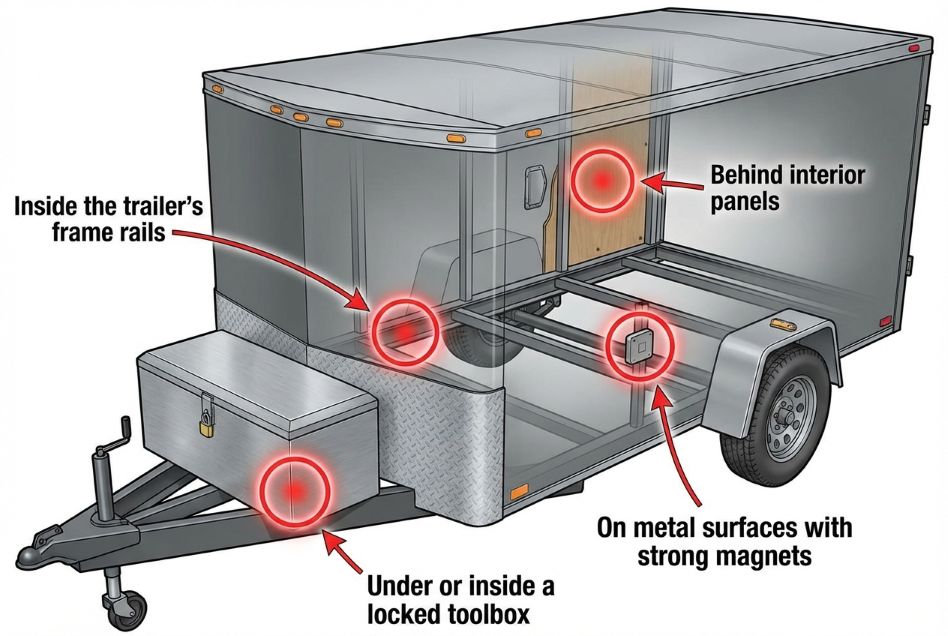
Installing a GPS tracker is simple when you know where to place it. The goal is to keep the device protected, hidden, and able to send a clear signal. A hidden gps tracker for trailer security works best when it’s placed in a spot that blends in with the trailer’s structure.
When installing your tracker, look for secure spots like:
- Inside the trailer’s frame rails
- Under or inside a locked toolbox
- Behind interior panels
- On metal surfaces with strong magnets
Inside The Frame
Start with the frame. Inside the frame rails is one of the safest locations. The tracker stays protected from road debris and weather while staying out of sight. Another strong option is under a locked toolbox. Many trailers already have toolboxes mounted on the front, which gives you a natural hiding place with easy access when you need to check the device.
Interior Panels
You can also place the tracker behind interior panels. Enclosed trailers make this easy because you can open a panel and tuck the device behind it. Just make sure the panel isn’t made of thick metal that can block the signal. A thin barrier is fine. The goal is to keep the tracker close enough to “see” the sky so it can pick up GPS signals without trouble.
Use A Magnetic Tracker
If you want more flexibility, choose a tracker with a magnetic mount. You can attach it to a steel surface like a support beam or crossmember. This type of placement gives you the option to move the tracker to a new spot later if needed. Magnetic mounts also let you reposition the device to test for better signal strength.
Try to avoid obvious places thieves check first, like open shelves or shallow compartments. The more hidden the placement, the less likely someone will find the device. After installation, move the trailer a short distance and check the app. This quick test shows whether the signal is strong and the alerts are working.
Plan for simple maintenance too. If your tracker uses a battery, check it during routine trailer inspections. Some apps send battery warnings, but it helps to look yourself before long trips or storage.
A good installation keeps your tracker safe, hidden, and working whenever you need it.
Using Your Tracker for Recovery
If you discover that your trailer has been taken, here’s how a GPS tracker can give you a real chance of getting it back.
First, you must act quickly. Open your tracking app as soon as you suspect a stolen trailer. Check for recent movement, route history, or last known location. The sooner you spot unusual movement, the better.
Then contact law enforcement. Report the theft and provide all the relevant details: trailer description, value, VIN or serial numbers, and the time and place you last saw it.
Next, share the tracking data with them. Many trackers offer live GPS location or recent location history. This gives police precise coordinates rather than vague descriptions, which can speed up recovery.
It’s important that you don’t try to approach thieves yourself. Let law enforcement handle recovery. If the trailer shows up on the map, it’s safer to wait for them rather than risking personal safety.
After police are involved, call your insurance company. Provide a copy of the police report, tracking history, and any pictures or documentation you have. This helps support insurance claims or recovery efforts if the trailer is uninsured.
There are many stories of successful recoveries thanks to GPS trackers. In one case, a stolen trailer carrying heavy equipment was traced to a yard and recovered by deputies all because the tracker gave accurate location data.
A GPS tracker doesn’t guarantee you’ll get your trailer back, but in a trailer theft situation, it gives you real evidence and a starting point.
Finding Your Perfect Match
Choosing the best GPS tracker for trailers feels easier when you follow a simple framework. Start with your budget. If you want a lower upfront cost, a basic battery-powered tracker is a good choice. If you’re comfortable paying a small monthly fee, you get more steady updates, better coverage, and smoother real time tracking. Think about what level of tracking fits how often you check the app.
Next, look at your trailer type and usage. The best trailer GPS tracker for a utility, equipment, or work trailer needs something tough and reliable, and should handle rough roads, vibration, and daily movement. An enclosed trailer can support a more tucked-away device. RV and camper owners may want longer battery life and steady alerts during storage. Commercial users may need tools that support several trailers at once.
Your monthly fee tolerance shapes your options too. Subscription plans support cellular data, fast alerts, and app access. No-fee models cost less over time but may update more slowly. Pick the option that matches how often you want to see movement alerts or location changes.
Think about whether your needs are business or personal. Businesses often want dashboards, shared access, and strong reporting. Personal users may care more about simple installation and reliable alerts.
Last, list the features you care about most. These might include:
- Long battery life
- Strong weatherproofing
- Geofence alerts
- Simple installation
- Hidden placement options
Once you know your priorities, it becomes easier to spot the tracker that fits your situation. You’ll choose with more confidence and get a device that supports how you use your trailer every day.
Which factor matters most to you right now, budget, features, or ease of use?
Bringing It All Together
When it comes to protecting your trailer, peace of mind is worth the investment. A reliable GPS tracker helps you know where your trailer is at all times, whether you’re hauling equipment for work or heading out on a road trip.
But not every tracker is the same. The right one depends on your specific needs. Do you need real-time tracking? Are you looking for long battery life? Maybe you want something simple to install. Make sure to think about how and where you use your trailer.
Also, remember that technology keeps improving. Many trackers now come with features like mobile alerts, geofencing, and easy-to-use apps. These updates make it easier to track and recover your trailer if anything goes wrong.
Take some time to explore options that fit your situation. Look at what’s available, compare features, and find a tracker that works for how you use your trailer. It’s a small step that can make a big difference.
What matters most to you, ease of use, strong security, or detailed tracking?